


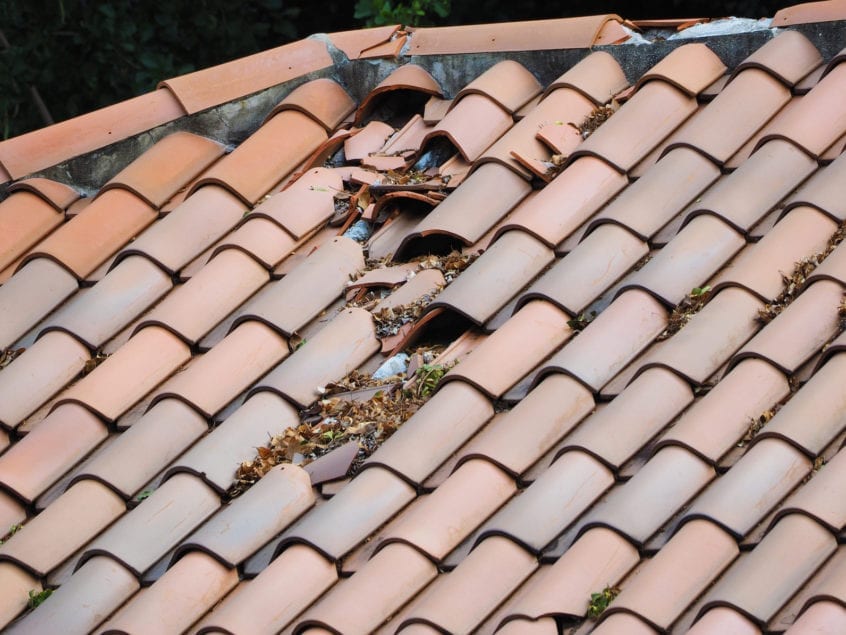
You spot a cracked tile in the driveway, or one that’s slid down near the gutter, and your first thought is how much it will cost to replace an entire roof. A tile roof isn’t cheap, and nobody wants to hear they need a whole new one.
Good news: usually, yes, you can replace just the broken tiles. Spot repairs are a normal part of looking after a tile roof.
The catch is that a quick tile swap only helps if what’s underneath is still in good shape. That’s the part most people don’t think about.
Tiles Don’t Keep Your Roof Dry On Their Own
A lot of people figure concrete or clay tiles are a watertight barrier. They’re actually not. Your roof is really two layers doing different jobs.
The tiles do most of the heavy lifting. They shed the bulk of the rain, block UV, and take the hits from wind and debris. Under them, sitting right on the wood deck, is the underlayment, a waterproof membrane that catches whatever sneaks through. In a good Vancouver downpour, wind pushes a surprising amount of water under overlapping tiles, and that membrane is what stops it.
The tiles also protect the membrane from sun and impact. So when a tile cracks or shifts, the underlayment is suddenly doing the job alone.
When Replacing a Few Tiles Is Enough
Swapping individual tiles works well when:
- Something hit the roof. A branch takes out two or three tiles, and the rest of the slope is fine.
- Wind knocked tiles loose. They’ve shifted, but the fasteners and interlocking tabs aren’t broken.
- A cold snap cracked one. Water sat on the surface, froze, and split a single tile along the bottom edge.
- The roof is fairly young. If it’s under 20 years old, the underlayment is probably still flexible and doing its job.
In those cases, a technician can slide out the damaged tiles, check the deck underneath, put in matching replacements, and secure them to the battens.
What We Check Under the Tile
Replacing a tile doesn’t take long. Figuring out whether your roof is still watertight takes longer. On every tile roof repair, lifting the broken tile is only the first step. Here’s what we look at next:
- Underlayment. If a cracked tile went unnoticed for a few months, rain was pooling on the membrane. Once it tears or rots, water goes straight into your attic.
- Battens. Tiles hook onto horizontal wood strips. Water rots them fast, and a new tile fastened to rotten wood will just slip again.
- Fasteners. Damp coastal air corrodes nails and clips. Rusty ones let neighbouring tiles work loose.
- Flashing. Valleys, step flashing and chimney saddles carry a lot of runoff. A lot of “tile leaks” turn out to be corroded metal or tired sealant nearby.
- Surrounding tiles. Tiles lock together, so whatever cracked one often leaves hairline cracks in the ones next to it.
Why Spot Repairs Aren’t Always Simple
Finding a match. Manufacturers change their moulds, discontinue profiles, or go out of business. A new tile often won’t fit against one made 20 or 30 years ago. Even when the profile matches, decades of West Coast rain and sun fade the old tiles, so the new one sticks out. A good roofer gets around this by tracking down old stock or pulling tiles from a back slope nobody sees and using them on the front.
Walking on the roof. Clay and concrete tiles are brittle, and stepping in the wrong spot will snap one. Homeowners who try DIY repairs often break five more tiles getting to the one they came for. Experienced crews use crawling boards to spread their weight and know where the supports are.
Finding the real leak. Water rarely drips where it gets in. It lands on the underlayment, runs sideways along the battens, follows a rafter, and only then shows up on your ceiling. The cracked tile you can see might be bone-dry underneath, while a pinhole leak ten feet uphill is causing the stain inside.
Spot Repair vs. Full Tile Roof Replacement
| Situation | Recommended Approach | What It Entails |
| Isolated Broken Tiles | Spot Repair | Replace damaged tiles, inspect local underlayment, verify fasteners. |
| Aging System (30+ Years) | Re-felting / Lift & Reset | Remove existing tiles, replace worn underlayment and rotted battens, reinstall original tiles. |
| Widespread Cracking & Pitting | Full Replacement | Strip the roof completely, install modern durable underlayment and new high-performance tile or metal. |
Tiles themselves can last upward of 50 years, but underlayment usually wears out somewhere between 20 and 30. If it’s brittle across the whole slope, patching broken tiles one at a time won’t keep your house dry.
Get Your Tile Roof Looked At By A Professional
Tile roofs need the right tools, installation experience, safety protocols, and an understanding of how much rain Vancouver gets. Even if you only need a few tiles replaced, a check on the underlayment, or just an honest opinion on how much life your roof has left, it’s worth having someone qualified take a look. Get a professional assessment from a pro.
Contact Taves Roofing to book a roof assessment and keep your tile roof in good shape.